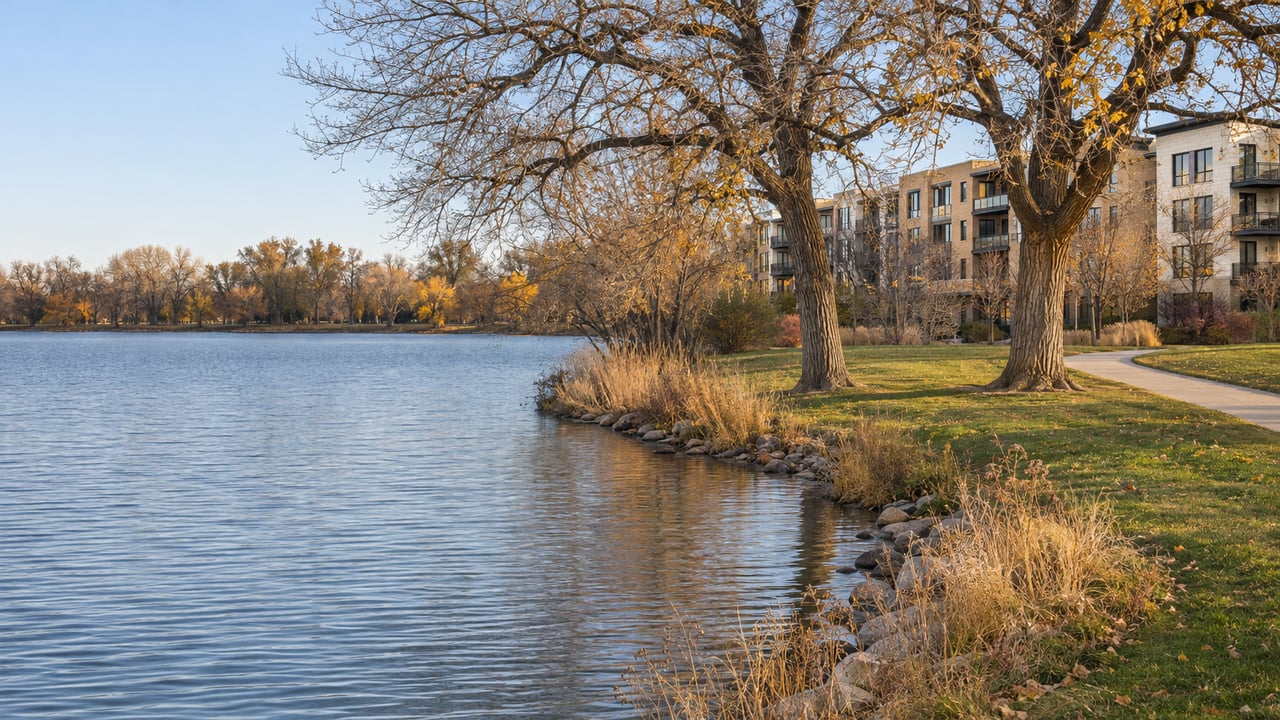
In many parts of Sloan's Lake it averages 2.5 to 3 feet. The lake used to be 8 to 12 feet deep. Most of what filled it washed in off the streets. Most of the money to dig it back out would come from the blocks along the park's south edge, where a hospital campus became a cinema, apartments and senior housing over the past decade.
In September the city announced a proposed $50 million project to restore Sloan's Lake. Under the city's own timeline, the water work itself is still years away. The park around the lake is already changing, though, starting at its corners and buildings.
Three Feet of Water Over a Bed Built for Twelve
The Denver Post describes Sloan's as a 177-acre lake that averages only 3 feet deep. Large parts of Denver, Edgewater, Lakewood and Wheat Ridge drain into it, carrying sand, sediment and street grime that have slowly filled in the bottom.
According to the city, that sediment feeds harmful algal blooms that pull oxygen out of the water, kill fish and destroy aquatic habitat. It also leaves the lake less able to withstand drought and to absorb stormwater. Denverite's headline summed it up as "stinky, hot and shallow." The outlet reported that the combination of sediment and Denver's rising heat had become a threat to the local economy that grew up around the lake.
The Colorado Dragon Boat Festival has felt this directly. The Post reported that the shrinking depth forced the festival to reschedule in past years, when the lake's condition raised safety and health concerns.
Councilwoman Amanda Sandoval told the Post that a cleanup has been in city plans since at least 2002. What changed in 2026 was where the money could come from.
Where the $50 Million Comes From
The city's release lists three proposed funding sources:
- Up to $40 million from the St. Anthony Urban Redevelopment Area, set up in 2013
- $5 million that Denver voters approved for Sloan's Lake in the Vibrant Denver Bond
- About $5 million from the city's Wastewater Enterprise Fund, which pays for stormwater and drainage infrastructure
The first source covers most of the cost, and it ties straight back to the neighborhood. The Post explains that the urban renewal area covers the former St. Anthony Central Hospital site, between North Perry and Stuart streets and West Colfax and 17th avenues. The area uses tax-increment financing, which pays for public improvements out of the growth in property taxes as redevelopment raises property values. Within the 32-acre district, that financing has already helped build the Alamo Drafthouse Cinema, The Raleigh at Sloan's Lake apartments and Vida at Sloan's, a Denver Housing Authority building for seniors and people with disabilities.
That makes the restoration the next item paid for by the redevelopment on the park's south edge. Mayor Mike Johnston explained why the money exists now, as reported by Denverite:
"So successful ahead of schedule that we have additional dollars we can allocate."
The city says the funding will not raise taxes or affect its budget. The investment needs approval from the Denver Urban Renewal Authority Board and then Denver City Council. DURA put a commitment-of-funds resolution for the St. Anthony area on the agenda for its September 14 special meeting.
Councilwoman Jamie Torres, whose district sits just south of the lake, explained to the Post why the project matters beyond the neighborhood: "(This) is a gem for everyone on this side of the highway. We don't have many parks of this size."
The Park Changes From the Edges First
Parks director Jolon Clark told Denverite there would be "not a lot of changes" to the lake in the very short term, since approvals still had to come first. The nearer-term changes are on land. Three separate projects are reshaping the park's corners and buildings on their own schedules:
| Project | Location | Schedule |
|---|---|---|
| Maintenance yard and shop | Southwest corner, near Sheridan Blvd. and W. 17th Ave. | City schedule listed the parking lot and basketball court closure for September 2026, with a trail segment closing later and closures expected through early 2027 |
| North tennis and basketball courts | North side of the park | Construction starts winter 2026, finishes fall 2027 |
| Boathouse conversion to an event space | North end of the park | Construction spring 2027 to early winter 2028, opening spring 2028 |
| Lake restoration | The water itself | Army Corps permitting in 2027, work starting in 2028, about 30 months once underway |
On its Sloan's Lake neighborhood projects page, Denver Parks and Recreation set September 2026 as the start of the parking lot and basketball court closure near Sheridan and 17th while the building there becomes a maintenance facility. The page expects closures through early 2027 and asks visitors to follow the posted detours. Denverite puts the boathouse conversion at $7 million. Once finished, the building moves from park operations to public use.
The order makes practical sense. Maintenance moves to a renovated yard in one corner, the north courts get rebuilt, and the boathouse turns into a gathering space. By the time dredging crews arrive, those jobs are scheduled to be done or nearly done.
What the Water Work Would Actually Look Like
The restoration has three parts. Crews would dredge sediment from the lakebed and haul it away. They would also add measures to keep new sediment from building up and restore the shoreline. Denverite reported that the shoreline work includes rebuilding the banks and restoring habitat around the lake, so sediment gets filtered out before it reaches the lakebed. The outlet also noted that the city has already reshaped some of the shoreline and installed aerators.
The Post reported that the lake will not be drained, though some sections may be walled off from the rest while crews work in them. Clark said he hopes to keep as much of the park open as possible. The city also plans to use the project to test dredging methods it could use on other Denver lakes, since dredging in a busy urban park is a hard job.
The goal is clearly defined. Clark told the Post he wants visitors to be able to paddleboard and boat on the lake safely when the work is done. Swimming is not part of the goal, because it requires a much higher water-quality standard. For people who fish, the city expects more depth and better water quality to support wildlife and improve fishing and paddling.
The Sloan's Lake Park Foundation turns 10 this year. Its executive director, Kurt Weaver, called the funding "an amazing gift." He also told the Post that the community should keep advocating for the project until construction is finished.
The West Edge This Winter
The city's schedule has the Sheridan and 17th lot closed through early 2027. A few places just west of Sheridan, in Edgewater, have changed recently.
Black Box Café opened in the final week of October at 5901 W. 25th Ave., in the former Suzette space. Westword reported that it turns the bakery into a sit-down café serving coffee, sandwiches, ice cream, chocolates and baked goods.
Edgewater Public Market, at 5505 W. 20th Ave., has two new concepts inside. Westword reported that Barbed Wire Reef became BWR Pit & Patty, switching to barbecue and smash burgers, and that Mugi reopened as Sandomi, serving onigiri, Japanese milk-bread sandos, bánh mì and cold drinks.
The Sloan's Lake Holiday BAZAAR is set for Saturday, December 5, from 11 a.m. to 5 p.m. at 1611 N. Raleigh St. The organizer's page lists room for up to 80 Colorado makers, along with food and drinks. Leashed dogs are welcome, and 61 makers were confirmed as of October 28.
The next item on the city's timeline is Army Corps permitting in 2027, which comes before any dredging starts in 2028.
If you own near the park and want to understand how the coming construction years fit into your plans, Sherry Beindorff follows these Sloan's Lake projects closely and is always glad to talk them through over coffee. Work With Us.